| Written by Mark Buzinkay
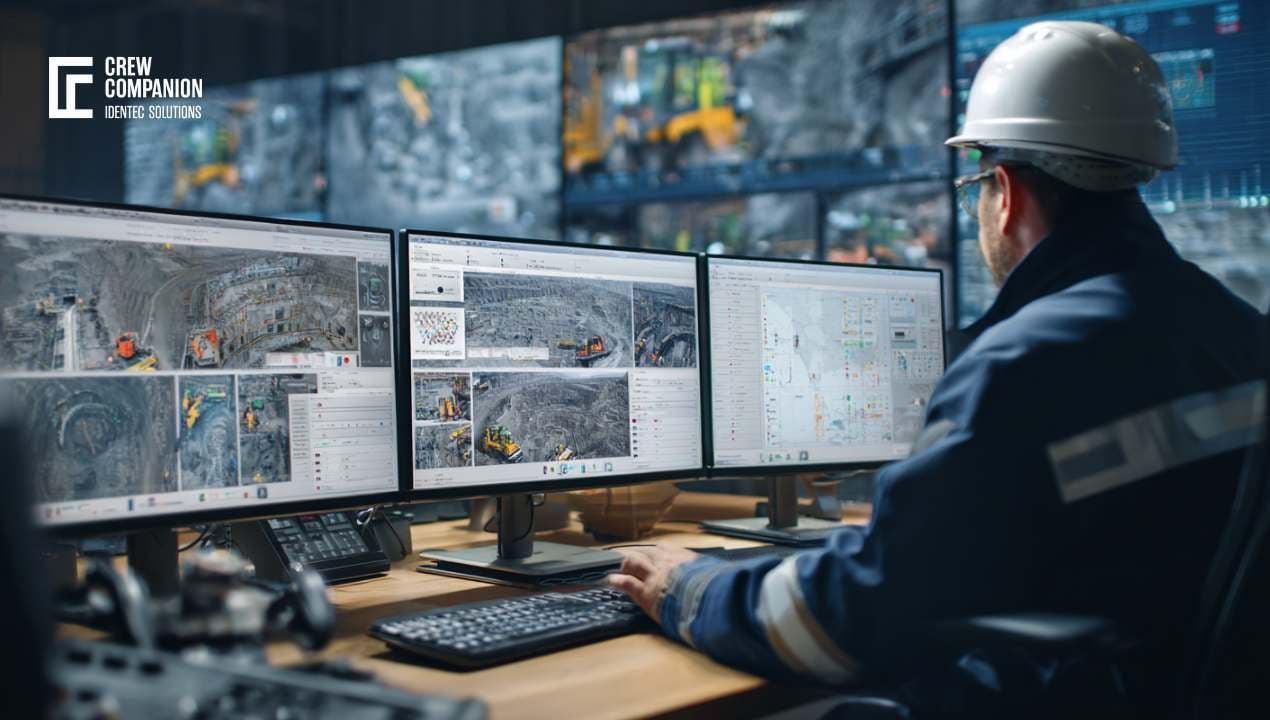
Table of contents:
- Why Missing Person Locator Systems Matter in Mining
- Legal and Regulatory Requirements Across Key
- Digital Missing Person Locator Technologies Mining Regions
- Control Room Needs: From Emergency Response to Blasting Optimisation
- Business Value and Future Outlook
- FAQ
- Takeaway
- Glossary
Why Missing Person Locator Systems Matter in Mining
Mining remains one of the most challenging industrial environments in the world. Underground operations are inherently complex, with limited visibility, confined spaces, and constantly changing conditions. Workers operate in remote tunnels, often far from immediate assistance, while hazards such as gas leaks, collapses, flooding, or fires can escalate quickly. In such an environment, knowing exactly who is underground—and where they are—is not just beneficial, it is critical (see also: Lone worker monitoring system).
This is where a missing person locator becomes indispensable. In mining, the term refers to systems that enable operators to identify the real-time or last-known location of personnel underground. Unlike traditional methods such as manual check-ins or paper-based roll calls, modern systems provide continuous visibility of workforce movements.
Historically, mines relied on basic entry/exit logging. Workers would sign in at the beginning of a shift and sign out at the end. While this approach provides a rough headcount, it offers no insight into where individuals are located during their shift. In an emergency, this lack of detail can significantly delay rescue operations.
A missing person locator addresses this gap by enabling real-time or near-real-time tracking. This capability transforms safety management. In the event of an incident, control rooms can immediately identify who is underground, determine who might be affected, and pinpoint last known locations. This dramatically reduces response times and improves rescue coordination. Beyond emergencies, there are also operational use cases. Mines today are highly dynamic environments with multiple contractors, rotating shifts, and complex workflows. Keeping track of personnel movement helps ensure compliance with safety procedures and improves overall accountability.
Ultimately, missing person locator systems bridge the gap between safety and productivity. They not only protect lives but also provide the operational transparency needed to manage increasingly complex mining environments efficiently.

Legal and Regulatory Requirements Across Key Mining Regions
Governments and regulatory bodies worldwide recognise the risks associated with mining. As a result, many jurisdictions have introduced strict requirements regarding personnel tracking underground. While the specifics vary by region, the underlying principle remains the same: operators must know who is underground at all times and be able to locate them in an emergency.
In Europe, mining regulations are often shaped by broader worker safety directives. These frameworks emphasise risk prevention, emergency preparedness, and accountability. Operators are expected to maintain accurate records of personnel underground and ensure that emergency response systems can quickly identify and locate workers. While not always prescribing specific technologies, regulators increasingly expect digital solutions that go beyond manual tracking.
In North America, requirements are more explicit. The Mine Safety and Health Administration (MSHA) mandates that underground mines must have systems in place to track and communicate with personnel. Following several high-profile mining accidents, regulations were strengthened to require reliable tracking capabilities that function even in emergency conditions. These rules emphasise redundancy, reliability, and real-time access to information.
Canada follows a similar approach, with provincial regulations requiring robust safety systems, including personnel tracking. Operators must demonstrate that they can account for all workers underground and provide timely information during incidents.
Australia is known for having some of the world's strictest mining safety standards. States such as Western Australia and Queensland require comprehensive safety management systems that include personnel tracking. Regulators expect operators to implement technologies that provide real-time visibility, especially in large or complex underground operations.
In South America, countries like Chile and Peru have strengthened their regulations in response to past mining incidents. While requirements may vary, there is a clear trend toward adopting digital tracking systems to improve safety and accountability.
Across all regions, several common themes emerge:
- Accountability: Operators must know who is underground at any given time.
- Traceability: There must be a way to determine where individuals are located.
- Emergency readiness: Systems must support rapid response and rescue operations.
Manual systems struggle to meet these requirements. They are prone to human error, lack real-time capabilities, and cannot provide location-specific information. As a result, many mining companies are transitioning to digital missing person locator solutions to ensure compliance and reduce legal risk.
Failure to comply with these regulations can have serious consequences, including fines, operational shutdowns, and reputational damage. More importantly, inadequate tracking can delay emergency response, putting lives at risk.
Learn more about mining safety training
Digital Missing Person Locator Technologies
The evolution from manual tracking to digital systems has transformed how mines manage personnel safety. Today’s missing person locator solutions leverage a range of technologies to provide continuous, accurate visibility of workers underground.One of the most widely used technologies is RFID (Radio Frequency Identification). At its simplest, RFID enables tracking at entry and exit points. Workers carry tags that are detected by readers installed at key locations. More advanced implementations allow for zone-based tracking, providing visibility into which area of the mine a worker is in.
Real-Time Location Systems (RTLS) take this a step further by enabling continuous tracking within the mine. These systems use technologies such as ultra-wideband (UWB), Bluetooth Low Energy (BLE), or Wi-Fi to determine precise locations. RTLS can achieve accuracy down to a few meters, enabling precise positioning.
Many modern solutions use hybrid approaches, combining multiple technologies to overcome the challenges of underground environments. For example, RFID may be used for reliable checkpoint tracking, while BLE or UWB provides finer location granularity in critical areas.
Deploying a missing-person locator underground poses unique challenges. Unlike above-ground environments, mines have irregular geometries, dense rock formations, and harsh conditions. Signals can be obstructed, and infrastructure must withstand dust, moisture, and potential explosions.To address these challenges, systems are designed with robust hardware and carefully planned infrastructure. Fixed readers or anchors are installed throughout the mine, creating a network that communicates with worker tags. Data is transmitted to surface-level servers or cloud platforms, where it is processed and visualised.
A key requirement is 24/7 operation. Missing person locator systems must function continuously, regardless of shifts or conditions. This requires redundancy in both hardware and communication networks. Backup power supplies, failover systems, and resilient network designs ensure that tracking remains operational even during disruptions.
On the software side, user interfaces play a critical role. Control room operators rely on dashboards that display real-time personnel locations, alerts, and system status. Features such as geofencing can trigger alarms when workers enter restricted areas, while historical data allows for post-incident analysis.
Cybersecurity is also an important consideration. As these systems become more connected, protecting data integrity and preventing unauthorised access is essential. Reliable missing person locator solutions incorporate secure communication protocols and robust data management practices.
Overall, digital technologies have enabled a level of visibility previously unattainable. They provide the foundation for safer, more efficient mining operations.
Control Room Needs: From Emergency Response to Blasting Optimisation
The control room serves as the central hub of mining operations. It is where data is consolidated, decisions are made, and responses are coordinated. For a missing person locator system to be effective, it must integrate seamlessly into the control room environment.
In emergency situations, the value of real-time personnel tracking becomes immediately apparent. When an incident occurs, operators need instant access to accurate information. A missing person locator allows them to identify who is underground, determine who may be at risk, and locate individuals quickly.
One of the most critical features is the ability to view a worker's last known location. In scenarios such as tunnel collapses or fires, this information can guide rescue teams and significantly reduce search time. Automated alerts can further enhance response by notifying operators of unusual situations, such as a worker remaining stationary for an extended period.
However, the importance of a missing person locator extends beyond emergencies. In fact, one of its most valuable contributions is to everyday operational efficiency.
A key example is blasting. Before a blast can occur, operators must ensure that all personnel are clear of the affected area. Traditionally, this process involves manual checks and communication, which can be time-consuming and prone to error. Any uncertainty can delay blasting, leading to costly downtime.
With a missing person locator, control rooms can verify clearance instantly. Real-time visibility ensures no one enters restricted zones, allowing blasting operations to proceed without delay. This not only improves safety but also enhances productivity.
In addition, personnel tracking supports better coordination of daily activities. Supervisors can monitor workforce distribution, identify bottlenecks, and optimise workflows. Integration with other systems, such as ventilation or fleet management, further enhances operational efficiency.
Usability is a critical factor. Control room interfaces must present information clearly and intuitively. In high-pressure situations, operators need to make quick decisions based on reliable data. A well-designed missing person locator system ensures that information is accessible and actionable.
Ultimately, the control room is where the benefits of personnel tracking are realised. By providing real-time visibility and actionable insights, missing-person locator systems enable safer, more efficient mining operations.
Business Value and Future Outlook
While safety is the primary driver for implementing a missing person locator, the business benefits are equally compelling. Mining companies operate in a highly competitive environment, where efficiency and reliability are key to success. Personnel tracking systems contribute to both.
One of the most immediate benefits is reduced downtime. By streamlining processes such as blasting clearance, mines can maintain consistent production schedules. Even small improvements in efficiency can have a significant impact on overall output.
Emergency response is another area where value is realised. Faster response times can reduce the severity of incidents, minimising both human and financial costs. In some cases, the ability to locate workers quickly can mean the difference between life and death.
Compliance is also a major factor. Implementing a digital missing person locator helps companies meet regulatory requirements and avoid penalties. It also demonstrates a commitment to safety, which can enhance reputation and stakeholder confidence.
Looking ahead, the role of missing person locator systems is set to expand. Advances in technology are enabling new capabilities, such as predictive analytics. By analysing movement patterns and environmental data, systems can identify potential risks before they lead to incidents.
Digital twins—virtual representations of mining operations—are another emerging trend. Integrating personnel tracking into these models can provide deeper insights into operations and support more informed decision-making.
Automation and remote operations are also on the rise. As mines become more automated, maintaining visibility of human workers remains essential. Missing person locator systems will play a key role in ensuring safe interaction between humans and machines.In conclusion, the missing person locator is no longer just a safety tool. It is a strategic asset that supports compliance, enhances efficiency, and enables the digital transformation of mining operations. As technology continues to evolve, its importance will only grow.
FAQ: Missing Person Locator in Mining
What is a missing person locator in mining?
A missing person locator in mining is a system that tracks and identifies personnel's real-time or last-known locations underground. It typically uses technologies such as RFID or RTLS to provide continuous visibility. These systems help operators know who is in the mine and where they are, improving safety, compliance, and operational control.
Are missing person locator systems legally required in mining?
In many regions, regulations require mining operators to account for all personnel underground and to support emergency response with reliable tracking capabilities. While not all laws explicitly mandate a specific technology, authorities such as the Mine Safety and Health Administration require systems that effectively track and communicate with workers, making digital missing person locator solutions the industry standard.
How does a missing person locator improve daily mining operations?
Beyond emergency response, a missing person locator improves efficiency by providing real-time visibility into the workforce. It helps control rooms ensure all personnel are clear before blasting, reduces delays, and supports better task coordination. Replacing manual checks with automated tracking minimises errors and enables faster, more informed decision-making across the operation.
Takeaway
Safety in mining depends on visibility, speed, and certainty. A missing person locator ensures that operators always know who is underground and where they are, enabling faster response in emergencies and preventing avoidable risks during daily operations. By replacing uncertainty with real-time data, these systems strengthen both compliance and worker protection. Ultimately, improving safety for mining is not just about reacting to incidents, but about creating a controlled, transparent environment where risks are continuously minimised (see: miners safety).
Delve deeper into one of our core topics: Mining safety
Glossary
Radio Frequency Identification (RFID) is a wireless technology that uses electromagnetic fields to automatically identify and track tags attached to objects or people. An RFID system consists of a tag, a reader, and a backend system. Tags store data and transmit it when activated by a reader’s signal. In mining, RFID enables personnel tracking and access control, serving as a core component of a missing-person locator system. (4)
References:
(1) https://cgi.cse.unsw.edu.au/~reports/papers/0910.pdf
(2) https://arlweb.msha.gov/TECHSUPP/pedlocating/wirelesscommandtrack2009pt2.pdf
(3) https://link.springer.com/article/10.1007/s42461-023-00864-5
(4) Klaus Finkenzeller, RFID Handbook: Fundamentals and Applications in Contactless Smart Cards and Identification, Wiley.
Note: This article was partly created with the assistance of artificial intelligence to support drafting. The head image was created by AI.