| Written by Mark Buzinkay
Table of contents:
- What is an inland terminal about?
- The inland reefer business in Europe
- Growing needs for handling reefers inland
- The potential reefer business benefits for inland terminals
- FAQ
- Takeaway
- Glossary
What is an inland terminal about?
Across Europe, inland terminals—often referred to as dry ports or multimodal terminals—serve as the hinterland extensions of seaports, concentrating rail, road, and inland waterway flows into integrated logistics platforms. A typical terminal combines rail sidings for block trains, barge quays connected to the Rhine, Danube, Seine or canal networks, and truck gates linked to regional distribution zones. These nodes marshal export flows from factories and agri-food clusters to the nearest gateway port, while deconsolidating imports for final-mile delivery, customs/bonded handling, and value-added services such as cross-docking, empty-container depots, maintenance, and reefer plug-in yards. Their operating model relies on scheduled rail shuttles and barge rotations, terminal operating systems that allocate slots and yard space, and close coordination with freight forwarders and shipping lines, which treat the inland site as a virtual maritime gateway.
In terms of footprint, Europe’s inland port and terminal network is extensive. The European Federation of Inland Ports (EFIP) represents about 200 inland ports across (at least) 18–19 EU Member States plus Switzerland, Serbia and Ukraine, underlining the breadth of the public-port backbone that hosts many of these terminals. (1) Beyond the public-port estate, the wider intermodal terminal universe—rail/road and barge/rail facilities on the continent—was mapped at roughly 1,200 sites in a pan-European inventory compiled for the UIC/UIRR combined-transport report, illustrating the density of access points that feed seaport corridors. Although that figure dates from 2020, it remains a useful order-of-magnitude indicator of installed capacity. (2) A more narrowly defined subset, the 168 terminals owned or operated by UIRR members, handled 6.88 million consignments in 2024, up 4.66% year on year—evidence that the core combined-transport network is growing even amid disruption. (3)
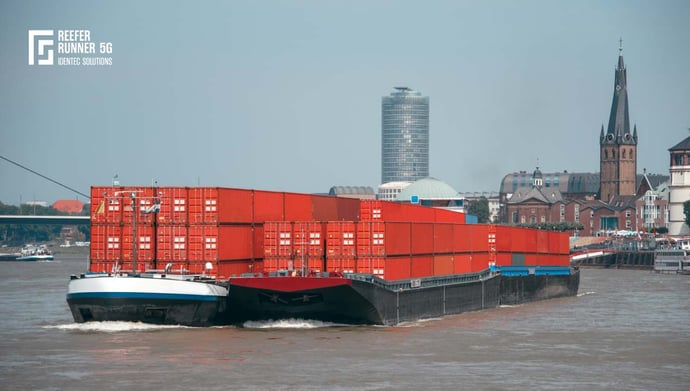
On the waterborne side, inland barge services are a structural pillar of these hubs. Eurostat reports that container transport on EU inland waterways rebounded in 2024, with TEU-kilometres up 3.7% as total inland-waterway freight rose 4.5% year on year; container moves accounted for 9.3% of EU inland-waterway transport performance that year. This followed a dip in 2023 and aligns with the longer-term pattern of volatility driven by water-level constraints and demand cycles. (4) Looking at absolute volumes, the CCNR/INland Navigation Europe market observation records that more than 6 million TEU moved on EU inland waterways in 2022, with Rhine countries—Germany, the Netherlands, Belgium and France—dominating flows, and the Danube corridor growing from a smaller base. (5)
Functionally, inland terminals are not merely transfer points; they are network shapers. By staging capacity inland, ports extend their “gravity” deep into Central and Eastern Europe, lowering door-to-door logistics costs, stabilising schedules, and decongesting quay space at maritime gateways. Academic work characterises inland terminals as pivotal nodes that enhance port competitiveness by integrating rail and barge corridors with regional production and consumption zones, effectively enlarging the seaport’s service hinterland and improving overall network resilience. (6)
Taken together, Europe’s inland terminal system—spanning a few hundred public inland ports and a four-figure network of intermodal terminals—anchors the rail-truck-barge interface that keeps seaports connected to factories, distribution centres and final markets. Its measurable growth in combined-transport consignments in 2024, alongside a recovering inland-waterway container segment, underscores why these inland platforms are central to any strategy that aims to decarbonise freight while safeguarding capacity between the coasts and the continent’s interior (see also: Inland waterways Europe).
The inland reefer business in Europe
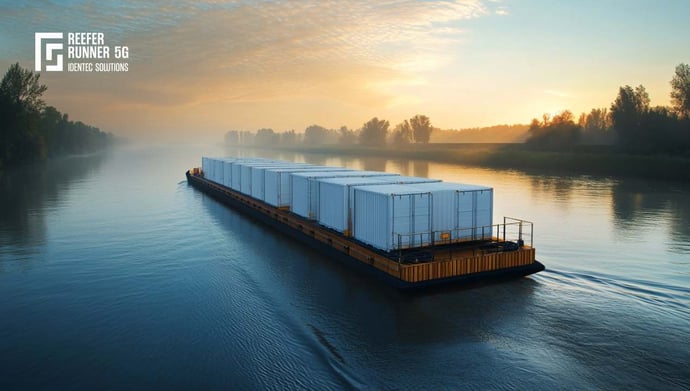
Refrigerated containers are no longer confined to seaport perimeters; they underpin an inland cold-chain that ties European gateways to food basins, pharma clusters and retail distribution centres. On rivers, barge-served inland ports on the Rhine, Meuse, Scheldt, and Seine have equipped container yards with reefer plug-in racks and 24/7 monitoring, allowing boxes to travel deep inland “live” and dwell safely before truck delivery. The Rhine corridor illustrates the scale: container barge traffic on the traditional Rhine was about 1.99 million TEU in 2021 and, despite water-level disruptions in 2022–2023, remains the backbone of inland containerisation between the ARA ports and Germany/Switzerland. If 5–10% of container flows are refrigerated—a typical port share cited by PortEconomics and confirmed for Antwerp-Bruges at “nearly 1 in 10” in 2025—then on the Rhine alone a six-figure volume of reefer TEU likely moves by water each year, with actual shares varying by season and corridor. (7)
Across the EU as a whole, Eurostat reports that container moves account for roughly 9–10% of inland-waterway transport performance (TEU-kilometres); 2023 dipped to about 1.3–1.4 billion TEU-km before rebounding in 2024. That container base is the addressable pool for “reefer-in-barge” flows, which are growing as ports and inland operators add sockets and remote condition monitoring. Paris’s Gennevilliers terminal on the Seine, for example, has rolled out 5G-based reefer monitoring as Le Havre–Paris barge services expand fresh food and pharmaceutical distribution into Île-de-France. (8)
Rail has emerged as the second inland pillar of the reefer business (see also: reefers on rails). The flagship CoolRail network—launched in 2019 between Valencia and Rotterdam and subsequently extended via Transfesa Logistics to the UK, the Nordics, Germany, and Poland—moves Spanish fruit and vegetables north in temperature-controlled trains, replacing thousands of truck trips and cutting CO₂ emissions by an estimated 15,000 tonnes per year. A typical early pattern of three weekly round trips with 42 reefer containers per train illustrates how block reefer services can aggregate stable volumes on long North–South lanes. New concepts, such as Raillogix’s “Cooltrain” and the preparedness of pan-European intermodal operators (e.g., Hupac, Kombiverkehr) to handle powered reefers and gensets, are widening rail’s cold-chain reach toward Italy, Germany, Poland, and beyond. (9)
Road remains the indispensable first/last-mile of the inland reefer chain and still carries the majority of containerised movements between terminals and shippers. Eurostat’s unitisation series shows containers are a modest single-digit share of total road tonne-kilometres, underscoring why inland terminals invest in on-dock reefer plugs and quick turntimes to minimise genset hours and keep trucks in short-haul feeder roles. The dense cold-storage base—ECSLA counts more than 60 million m³ of cold capacity across Europe—anchors this road-connected hinterland distribution.
In terms of “how big” the inland reefer business is, Europe lacks a single official statistic that isolates reefer TEU inland by mode; the market is usually embedded within total container figures and broader cold-chain logistics, a sector valued at roughly €75–€85 billion in 2024–2025 and growing quickly on the back of food and pharma demand. As a proxy, global analyses put refrigerated containers at ~5% of all TEU, rising toward ~7 million TEU by 2030; applied to EU inland container flows on barges (≈1.3–1.4 billion TEU-km in 2023/24) and to rail shuttle networks, this implies a substantial and expanding inland reefer segment, concentrated on ARA–Rhine/Ruhr–Basel, Le Havre–Paris/Gennevilliers on the Seine, and Spain–Benelux/Germany via CoolRail, with complementary flows on Antwerp–Liège/Albert Canal and Rotterdam–Venlo/Born–Duisburg barge corridors.
Growing needs for handling reefers inland
The reefer business is expanding for structural reasons at sea and on land, and that growth is now pulling capacity and capabilities deep into Europe’s hinterland. On the equipment side, 2025 is shaping up to be a record year for reefer container production, with trade press reporting higher orders—approximately a 10% increase—driven by resilient demand in temperature-controlled trades, even as dry box manufacturing softens. This tilt toward refrigerated capacity reflects continued strength in high-value perishables and pharmaceuticals, where shippers pay for reliability and integrity; WorldCargo News notes that while total container manufacturing may ease, reefer output is expected to set a new high in 2025. (10) In parallel, Europe’s cold-chain spend keeps rising: analysts estimate the continent’s cold-chain logistics market at roughly USD 79–105 billion in 2024, with sustained growth through the decade, underpinned by food imports, fresh retail formats and life-sciences distribution. Pharma is a particularly durable driver, with Europe’s temperature-sensitive healthcare logistics alone around USD 21.5 billion in 2025 and expanding steadily, and with majors such as DHL investing to scale speciality capabilities. (11)
Those cargo fundamentals are pushing demand from and to inland producers and markets. Large consumer basins—such as Paris/Île-de-France, the Rhine-Ruhr and Alpine regions, and Central/Eastern European cities—prefer to stage reefer boxes closer to distribution centres and processors to shorten truck legs, de-risk dwell time, and reduce genset hours. Inland terminals and barge operators have responded by adding sockets, monitoring and train/barged-in services so containers can stay powered “live” far from the quay. On the Seine, Paris Terminal’s Gennevilliers hub has implemented real-time reefer monitoring over 5G to make fluvial cold-chain more reliable and visible to shippers, supporting a modal shift from road as Le Havre–Paris services scale. (12) Along the Rhine system, operators explicitly market reefer capability on barge services and at terminals such as Liège, Basel, Duisburg and Mannheim, with published equipment counts and reefer plug availability, signalling both demand and capacity growth inland. (13)
Rail has simultaneously become a more “reefer-friendly” inland backbone. Purpose-built power wagons now allow reefers to draw electricity during the journey—either autonomously or via locomotive power from the catenary—avoiding ad-hoc diesel gensets and simplifying train operations. RailRelease describes both an autonomous “power wagon” that generates electricity in motion and a “plug-in power wagon” that is fed directly from traction power, designs aimed at making temperature-controlled intermodal blocks operationally robust. (14) Scheduled North–South corridors like CoolRail’s Valencia–Rotterdam spine, extended by Transfesa toward the UK, Nordics, Germany and Poland, illustrate why shippers are pushing more reefer boxes onto inland rail: reliable departures, lower emissions, and fewer handling events between farms or packhouses and retail DCs. Policy tailwinds reinforce these choices: the EU’s Sustainable and Smart Mobility Strategy targets significant shifts to rail and inland waterways by 2030–2050, nudging supply chains to develop inland “cold nodes” where reefer containers can connect to greener main legs.
Barges, for their part, are adding explicit reefer capacity. New and upgraded services on the Rhine publish slot numbers—on the order of two to three dozen powered positions per vessel—so that perishables and pharma can ride under power from ARA ports into Germany and Switzerland, then disperse by short-haul truck. This standardised capacity, coupled with socketed yards and 24/7 monitoring at inland terminals, is converting sporadic flows into repeatable networks.
In short, rising reefer container supply, expanding cold-chain demand in food and life sciences, rail innovations such as built-in power wagons, and barge services with dedicated reefer slots are all converging to make inland handling of reefers not just feasible but necessary—because Europe’s biggest consumers, processors and exporters sit inland. They now expect seaport-grade cold-chain resilience at their doorstep (see also: cold chain regulations).
The potential reefer business benefits for inland terminals
For inland terminals across Europe, investing in reefer-handling capability is no longer a niche bet—it is a strategic move that aligns with structural shifts in global trade, regional consumption, and sustainability regulation. Reefer cargo represents one of the fastest-growing and most resilient segments in the container logistics industry. The worldwide reefer container fleet continues to expand, with manufacturing up 10% year-on-year in 2025 according to WorldCargo News, signalling sustained demand for temperature-controlled logistics even amid softening dry container volumes. Within Europe, cold-chain logistics is a market worth roughly USD 80–100 billion and forecast to grow 7–9% annually over the decade, driven by rising imports of fresh produce, expanding food retail networks, and pharmaceuticals that increasingly rely on GDP-certified cold transport. Inland terminals are ideally positioned to capture part of that value as critical inland nodes linking seaports with producers, distributors, and retailers across the hinterland.
The operational and financial benefits of entering the reefer segment are tangible. First, it diversifies revenue streams beyond standard container throughput. Terminals that add plug-in points, reefer racks, and monitoring can charge premiums for power supply, dwell, and service supervision. Ports such as Antwerp-Bruges and Rotterdam already treat reefer handling as a profit centre, with “nearly one in ten” containers refrigerated, and inland terminals can replicate that model inland at lower land and labour costs. Second, reefer capability attracts new customer segments—fresh produce importers, food processors, life-science distributors, and third-party logistics providers—that seek stable inland staging areas for temperature-sensitive cargo. Once a terminal can power and monitor reefer boxes, it becomes a viable node for cross-docking, inspection, or value-added services such as pre-trip inspections (PTI) or Customs veterinary checks, which can be co-located inland to decongest seaports.
Investing ahead of demand can be justified when viewed through the lens of network readiness. Cold-chain shippers only consider intermodal routes if consistent infrastructure exists along the corridor. A single inland terminal without plugs may block an entire multimodal service. Therefore, early adopters create a first-mover advantage: by signalling reliability to barge and rail operators, they anchor scheduled services that in turn generate the very demand they anticipated. This pattern is visible in Paris’s Gennevilliers terminal on the Seine, where 5G-based reefer monitoring and expanded sockets were installed before full demand materialised; today, Le Havre–Paris barge services regularly move temperature-controlled containers with remote supervision. The same applies to Rhine terminals like Liège and Basel, which equipped reefer infrastructure early to secure fruit and pharmaceutical flows from Antwerp and Rotterdam.
Inland terminals can further stimulate reefer demand by partnering with shipping lines and forwarders to ensure plug availability along intermodal chains, offering bundled logistics (e.g., storage, power, and truck delivery), and promoting sustainability metrics. The environmental argument is strong: shifting perishable cargo from long-haul road to barge or rail can reduce CO₂ emissions by 50–70%, aligning with EU Fit for 55 and corporate decarbonisation goals. Reefer capacity also makes terminals more resilient in downturns, since food and pharmaceuticals are less cyclical than dry commodities.
Ultimately, inland reefer handling transforms terminals from pure transfer points into value-added logistics platforms. A modest investment—dedicated power lines, plug sockets, genset storage, and monitoring software—can unlock a higher-margin, less volatile segment of the intermodal business. Those who invest early position themselves as indispensable cold-chain partners for a growing inland economy that demands seaport-grade temperature control far from the coast. The experience of pioneering hubs such as Gennevilliers, Liège, and Venlo demonstrates that once reefer infrastructure exists, cargo follows.
FAQ: Inland Terminal Reefer Business
Why should inland terminals invest in reefer infrastructure if current demand is low?
Because demand is growing fast and depends on network readiness. Cold-chain shippers choose intermodal routes only if reliable reefer infrastructure exists along the corridor. Early adopters—such as Gennevilliers or Liège—proved that once plugs, monitoring, and power capacity are in place, reefer cargo follows. Investing early secures a first-mover advantage and positions terminals as indispensable cold-chain hubs.
How does automated reefer monitoring improve inland terminal operations?
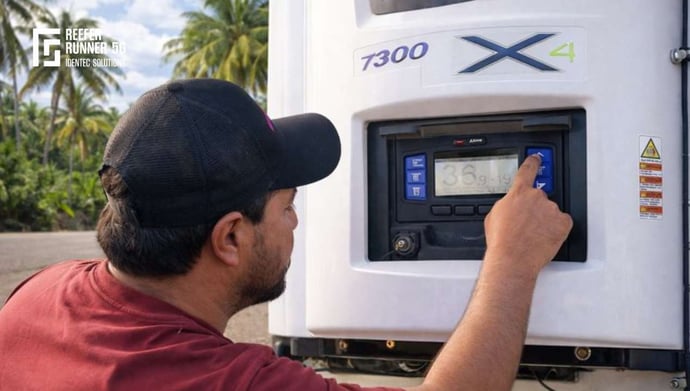
Automated monitoring enables real-time visibility of temperature, power status, and alarm events. This eliminates manual inspection rounds, reduces energy waste, and ensures full compliance with cold-chain standards. By using IoT sensors and cloud dashboards, terminals can monitor hundreds of reefers remotely, minimise downtime, and provide premium-quality service to shippers at lower operational cost.
Which commodities drive inland reefer traffic in Europe?
The main growth drivers are fresh produce, frozen foods, pharmaceuticals, and other temperature-sensitive goods. Increasing imports of fruit and vegetables from Southern Europe, combined with the expansion of inland food processing and life-science clusters, are creating steady reefer flows along corridors such as Le Havre–Paris, Antwerp–Rhine–Basel, and Valencia–Rotterdam via CoolRail.
Takeaway
Automated reefer monitoring is the key enabler for efficient and scalable inland reefer management. By integrating sensor-based reefer tracking, remote temperature control, and 24/7 alerts, inland terminals can ensure cargo integrity, reduce manual checks, and optimise power usage. Such digital oversight transforms reefer handling from a labour-intensive task into a data-driven service, improving reliability for shippers and cutting operational costs. For terminals seeking to enter or expand in the cold-chain market, automation is not just a tool—it is the foundation of a competitive and sustainable reefer business model.
Delve deeper into one of our core topics: Cold Chain Monitoring
Glossary
Cross-docking is a logistics process in which inbound goods are unloaded from trucks, containers, or railcars and directly transferred to outbound vehicles, with minimal or no storage in between. This approach reduces inventory holding, shortens lead times, and optimises transport efficiency. It is widely used in retail and cold-chain logistics to maintain product freshness and streamline distribution flows. (15)
References:
(2) https://uic.org/IMG/pdf/2020_report_on_combined_transport_in_europe.pdf
(3) https://www.uirr.com/sites/default/files/documents/UIRR_RA_2025_V10def.pdf
(4) https://ec.europa.eu/eurostat/web/products-eurostat-news/w/ddn-20250912-4
(5) https://inland-navigation-market.org/chapitre/2-transport-fluvial-de-marchandises/
(6) https://www.mdpi.com/2305-6290/9/1/2
(7) https://inland-navigation-market.org/wp-content/uploads/2022/10/CCNR_annual_report_EN_2022_BD.pdf
(8) https://ec.europa.eu/eurostat/statistics-explained/SEPDF/cache/55178.pdf
(9) https://www.coolraileurope.com/en/
(10) https://www.worldcargonews.com/container-industry/2025/10/container-manufacturing-poised-to-drop/
(12) https://www.worldcargonews.com/news/2025/05/reefer-monitoring-on-the-seine/
(14) https://www.railrelease.com/powerwagon/
(15) Apte, U. M., & Viswanathan, S. (2000). Effective cross docking for improving distribution efficiencies. International Journal of Logistics Research and Applications, 3(3), 291–302.
Note: This article was partly created with the assistance of artificial intelligence to support drafting.