| Written by Mark Buzinkay
Table of contents:
- The Evolution of the Underground Mining Vehicle
- Underground Mining Vehicle Workflows and Operational Processes
- Remote Operation and Automation of Underground Mining Vehicles
- Positioning, Navigation, Communication, and Collision Awareness
- Improving Safety and Efficiency Through Connected Mining Systems
- FAQ
- Takeaway
- Glossary
The Evolution of the Underground Mining Vehicle
Underground mining operations have become increasingly complex over the last several decades. Mines are becoming deeper, tunnel networks are expanding, and production targets continue to increase. At the same time, operators face growing pressure to improve worker safety, reduce downtime, lower operating costs, and achieve sustainability targets.
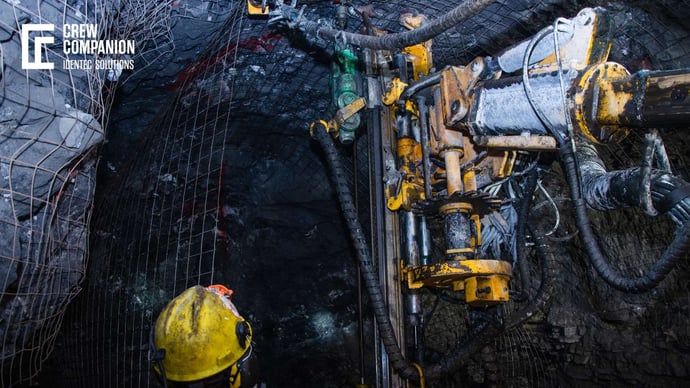
Traditionally, underground mining vehicles relied almost entirely on manual operation. Operators sat directly inside loaders, haul trucks, drilling rigs, or support vehicles and controlled every movement in challenging underground environments. Limited visibility, dust, vibration, heat, and hazardous conditions created operational difficulties and increased risks.
Today, a modern underground mining vehicle operates very differently. Instead of functioning as isolated machines, vehicles increasingly operate as part of a connected underground ecosystem that combines sensors, communication networks, fleet management software, and intelligent automation systems.The progression generally follows several stages:
Manual operation: Operators directly control all machine functions.
Remote operation: Operators control vehicles from a safe distance using cameras and wireless systems.
Semi-autonomous operation: Machines perform certain tasks automatically while operators supervise.
Fully autonomous operation: Vehicles make operational decisions and complete predefined workflows with minimal human intervention.
The move toward automation is driven by several factors:
- Increasing safety requirements
- Labor shortages
- Higher productivity expectations
- Deeper underground operations
- Reduced worker exposure to hazardous areas
- Continuous production demands
Automation does not simply replace operators. Instead, it shifts workers' roles from direct machine control to supervision, optimisation, and decision-making. Modern underground mining increasingly focuses on maximising equipment utilisation while reducing operational risks and inefficiencies. Automated and tele-remote technologies have shown significant potential for improving productivity and safety in underground environments. (1)

Underground Mining Vehicle Workflows and Operational Processes
Underground vehicles rarely work independently. They are part of coordinated workflows where multiple machines interact continuously throughout mining operations. Understanding these workflows helps explain why automation and intelligent fleet coordination have become increasingly important.
Loading and hauling cycles
One of the most common underground workflows involves loading and hauling ore.A typical sequence may include:
- Drilling and blasting break the rock.
- Load-Haul-Dump vehicles collect fragmented material.
- Haul trucks transport material to crushers or ore passes.
- Empty vehicles return to loading zones.
- The cycle repeats continuously.
Although this process appears straightforward, numerous variables affect performance:
- Traffic congestion
- Vehicle waiting times
- Equipment availability
- Road conditions
- Loading efficiency
- Operator behavior
Even small delays can significantly reduce production output. For example, if a haul truck waits several minutes for loading or encounters traffic bottlenecks, productivity losses accumulate across the entire fleet. Modern mining operations increasingly monitor:
- Cycle time
- Equipment utilization
- Queue times
- Fuel or battery consumption
- Vehicle speed
- Payload efficiency
Automation systems can optimise these variables by coordinating equipment movements in real time.
Drilling and development workflows
Underground development follows another sequence of interconnected operations.Typical stages include:
- Face drilling
- Charging explosives
- Blasting
- Ventilation clearing
- Scaling
- Ground support installation
- Material removal
Each activity depends on completing the previous steps. Drilling jumbos increasingly use automated drilling patterns and positioning systems to improve consistency and reduce cycle variation. Support vehicles can also coordinate activities based on real-time mine status information. Automated coordination minimises idle periods between operational stages.
Maintenance and support operations
Underground mines rely on many support vehicles that perform essential but often overlooked tasks. Examples include:
- Fuel and lubrication vehicles
- Personnel carriers
- Water trucks
- Maintenance vehicles
- Inspection units
- Emergency response vehicles
Digital systems increasingly monitor vehicle health conditions and maintenance schedules.
Predictive maintenance can identify component failures before they cause breakdowns, reducing unexpected downtime. Connected fleet systems allow operators to understand not only where vehicles are located but also how effectively they contribute to production targets.
Learn more about operations and mining safety training
Remote Operation and Automation of Underground Mining Vehicles
Automation in underground mining does not occur instantly. Most operations transition gradually from remote control toward increasing autonomy.
Tele-remote operation
Tele-remote operation removes workers from hazardous environments while allowing machines to continue operating. Instead of sitting inside the equipment, operators use control stations equipped with:
- Video displays
- Multiple cameras
- Joysticks
- Sensor feedback
- Machine status information
The operator may remain underground in a protected room or work from a surface control centre. Tele-remote systems are particularly useful after blasting operations because personnel exposure near unstable rock formations can be minimised. Remote-controlled systems can significantly improve safety while maintaining productivity. (1)
Semi-autonomous operation
Semi-autonomous systems combine machine intelligence with human supervision.Typical automated functions may include:
- Automatic tramming
- Automatic route following
- Loading assistance
- Dumping sequences
- Speed control
- Traffic coordination
Operators supervise performance and intervene when necessary. his approach reduces repetitive tasks while improving operational consistency. Because human error can contribute to productivity losses and safety incidents, semi-autonomous operation often creates more predictable workflows.
Fully autonomous operation
Fully autonomous systems represent the next stage of underground mining. These vehicles can:
- Determine routes
- Detect obstacles
- Avoid collisions
- Complete work cycles
- Coordinate with other machines
- Respond to changing conditions
Autonomous loading and hauling systems can operate continuously during shift changes and blast clearance periods, increasing equipment utilisation. Autonomous fleet technologies now allow multiple underground machines to operate simultaneously with centralised supervision. (2) The role of human workers changes from machine operation toward monitoring and strategic decision-making.
Positioning, Navigation, Communication, and Collision Awareness
Autonomous operation underground presents unique challenges because traditional GPS signals cannot penetrate rock. Underground mining vehicles, therefore, require specialised technologies to understand where they are and what surrounds them.
Positioning and localization
Localisation is fundamental for automation.An underground mining vehicle must constantly determine its position with high accuracy.
Several technologies are commonly used:
Real-Time Location Systems (RTLS): RTLS provides location data using wireless infrastructure throughout the mine.
Radio Frequency Identification (RFID): RFID tags installed at specific points help vehicles recognise locations and checkpoints.
Ultra-Wideband (UWB): UWB technology provides precise position measurements with relatively high accuracy.
LiDAR systems: Laser scanning creates three-dimensional maps of underground environments.
Inertial navigation systems: Gyroscopes and accelerometers estimate vehicle motion relative to reference points.
Vision-based localization: Camera systems compare visual features against existing maps.Researchers continue developing increasingly accurate underground localisation systems because reliable positioning remains essential for autonomous operation. Advanced localisation approaches can achieve highly precise positioning in underground environments. (3)
Navigation and route planning
Position alone is insufficient. Vehicles also need to determine how to move through underground tunnel networks efficiently. Navigation systems use:
- Digital mine maps
- Traffic information
- Route optimization algorithms
- Obstacle detection
- Dynamic path planning
If a haul truck encounters a blocked route, the system may automatically calculate an alternative path. Autonomous systems can continuously adjust their operations in response to changing underground conditions.
Collision awareness systems
Vehicle collisions remain a significant safety concern in underground mining. Restricted visibility, tunnel intersections, and heavy traffic can increase risks. Collision awareness systems typically combine:
- Radar
- Cameras
- LiDAR
- Proximity sensors
- Geofencing technologies
These systems detect:
- Other vehicles
- Workers
- Tunnel structures
- Obstacles
- Restricted areas
Warnings can alert operators, while autonomous systems may automatically reduce speed or stop vehicles. Advanced automation platforms increasingly incorporate sophisticated traffic management systems and access controls.
Communication and connected fleets
Communication forms the foundation of intelligent underground operations. Vehicles increasingly exchange information through underground wireless networks. Examples include:
- Wi-Fi systems
- LTE networks
- private 5G networks
- mesh communication systems
Machine-to-machine communication allows equipment to share information regarding:
- Position
- Traffic status
- Equipment conditions
- maintenance alerts
- production information
Connected systems allow operators to monitor underground operations in real time. This improves visibility and enables better operational decisions.
Improving Safety and Efficiency Through Connected Mining Systems
Modern underground mines increasingly operate as integrated digital environments rather than collections of independent machines. Connected systems improve safety in several ways. Workers spend less time in hazardous zones because remote and autonomous technologies reduce direct exposure to:
- unstable rock conditions
- blasting areas
- dust
- vibration
- traffic hazards
Collision-avoidance systems provide additional protection by continuously monitoring vehicle interactions. At the same time, efficiency improvements become possible because vehicles spend less time waiting, idling, or travelling unnecessary distances. Real-time fleet management can:
- optimise traffic flow
- reduce queue times
- increase equipment utilization
- lower operating costs
- improve maintenance planning
Digital twins and artificial intelligence may eventually enable mines to simulate entire operations before implementing decisions in the field. Rather than reacting to problems after they occur, mining companies increasingly aim to predict and prevent them. The underground mining vehicle is therefore evolving into a highly connected, intelligent operational platform capable of supporting safer, more productive mining environments.
FAQ
How does remote control work for an underground mining vehicle?
Remote control systems use cameras, sensors, and wireless communication networks to allow operators to control equipment from protected underground rooms or surface control centres. Operators receive real-time visual and machine data while remaining out of hazardous areas.
Why can’t underground mining vehicles use GPS?
GPS signals cannot penetrate rock formations effectively. Underground vehicles instead rely on technologies such as RTLS, RFID, UWB, LiDAR, inertial navigation systems, and vision-based localisation to determine their positions.
Are fully autonomous underground mining vehicles already used?
Yes. Several mining operations already use autonomous loaders, trucks, and drilling equipment that can complete production cycles with minimal human intervention. However, many mines currently operate semi-autonomous systems under remote supervision.
Takeaway
An underground mining vehicle is increasingly becoming part of a connected ecosystem rather than functioning as a standalone machine. Automation, remote operation, and autonomous workflows improve productivity while reducing worker exposure to hazardous environments. Vehicle localisation and intelligent traffic management are becoming increasingly important because accurate positioning, communication networks, collision-avoidance systems, and real-time fleet coordination enable safer underground movement, reduce bottlenecks, and support efficient operation across increasingly complex mine infrastructures. (see: miners safety).
Delve deeper into one of our core topics: Mining safety
Glossary
LiDAR (Light Detection and Ranging) is a sensing technology that measures distances by emitting laser pulses and calculating the time required for reflected light to return to the sensor. By processing millions of measurements per second, LiDAR creates highly accurate three-dimensional representations of the surrounding environment. In underground mining, LiDAR helps vehicles perform localisation, obstacle detection, navigation, and collision awareness, enabling remote-controlled and autonomous operation in environments where GPS signals are unavailable. (4)
References:
(2) https://www.mining.sandvik/en/digital-solutions/automation/
(3) https://arxiv.org/abs/1903.08313
(4) https://www.neonscience.org/resources/learning-hub/tutorials/lidar-basics
Note: This article was partly created with the assistance of artificial intelligence to support drafting. The head image was created by AI.