| Written by Constance Stickler
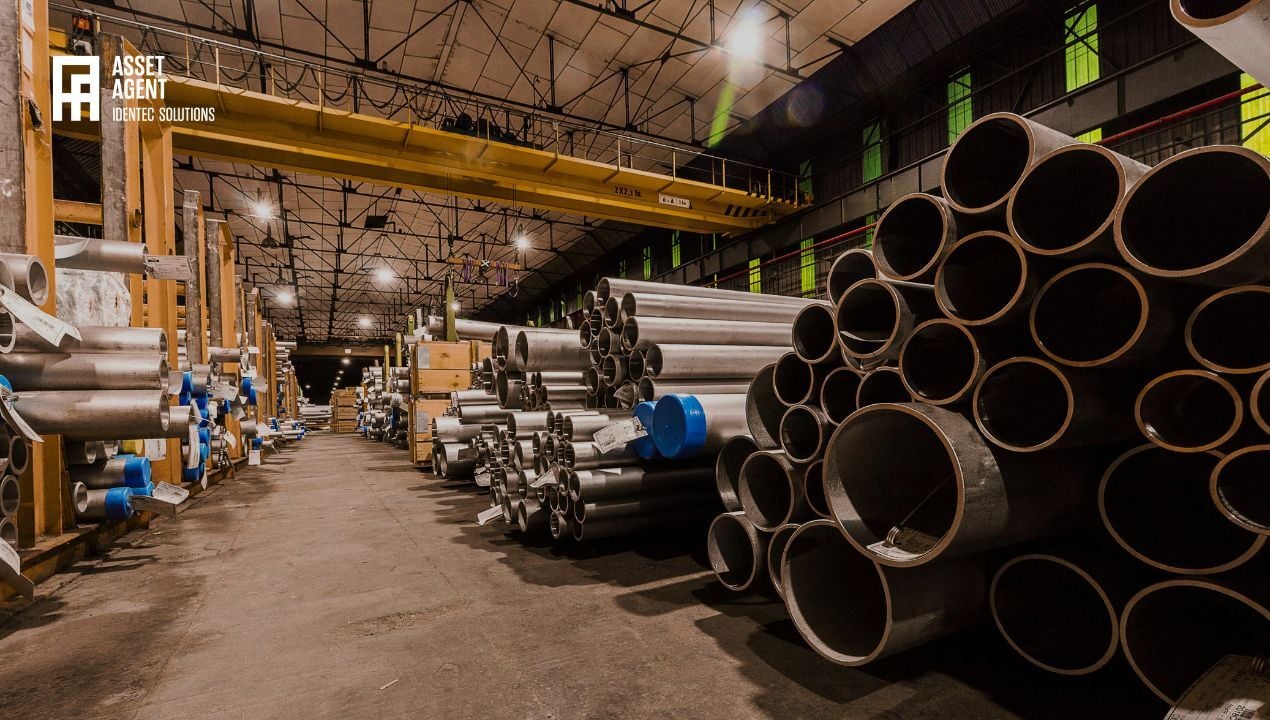
Table of contents:
- The Warehouse at the Heart of Breakbulk Complexity
- Why Do Breakbulk Warehouses Still Struggle With Visibility?
- How to Get From Static Storage to Event-Driven Operational Visibility?
- Event-Driven Awareness Through Control Points
- The Warehouse as a Dynamic Coordination Hub
- FAQ
- Takeaway
- Glossary
The Warehouse at the Heart of Breakbulk Complexity
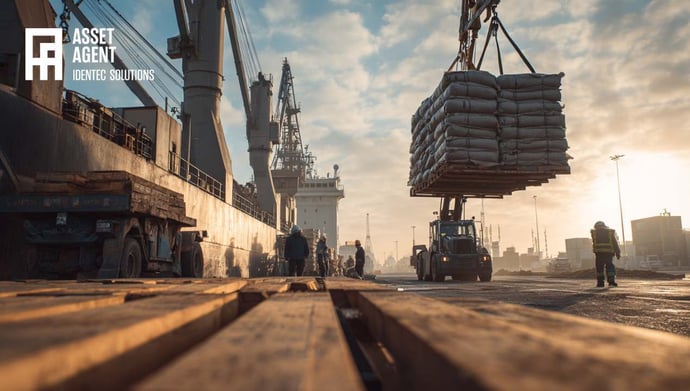
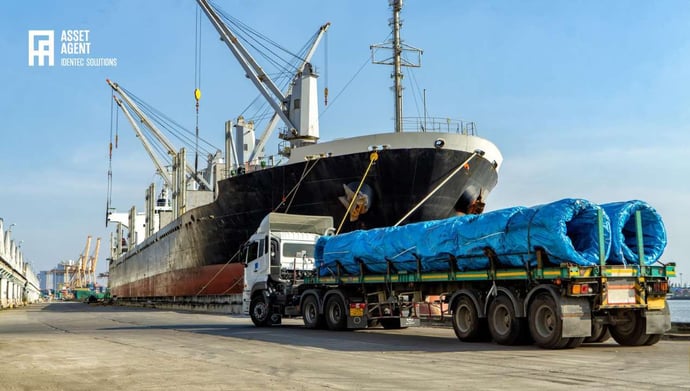
Breakbulk cargo is characterised above all by one thing: variability. It arrives in a wide variety of forms, sizes, and conditions. Steel coils, bundles of wood, wind turbine components, bagged goods, heavy cargo – each shipment brings its own specific requirements for handling, storage, and documentation.
The breakbulk warehouse is more than just a storage space; it's where freight is received, sorted, consolidated, inspected, and prepared for onward transport. Any operational uncertainties become apparent here: cargo that cannot be clearly identified, located, or verified against its documentation quickly leads to delays, disputes, or even security risks.
Despite significant progress, certain blind spots remain. Terminal operators are familiar with the problem: cargo arrives with inconsistent labelling, documentation is scattered across various parties, and visibility is often limited to manual checks or isolated systems. The result is a constant conflict between throughput and control.
It's not just about handling the freight efficiently, but about visibility: what is located where in the warehouse and what needs to be done next?

Why Do Breakbulk Warehouses Still Struggle With Visibility?
A key operational challenge in breakbulk terminals is maintaining transparency. Cargo arrives, passes through multiple hands, is temporarily stored, or consolidated. Unlike containerised freight, where goods are grouped in standardised containers with standardised identification, breakbulk is inherently fragmented. Each item can have its own documentation, its own labelling system, its own handling requirements, and its own operational priority. This diversity makes it difficult to maintain a consistent, uninterrupted flow of information within the warehouse.
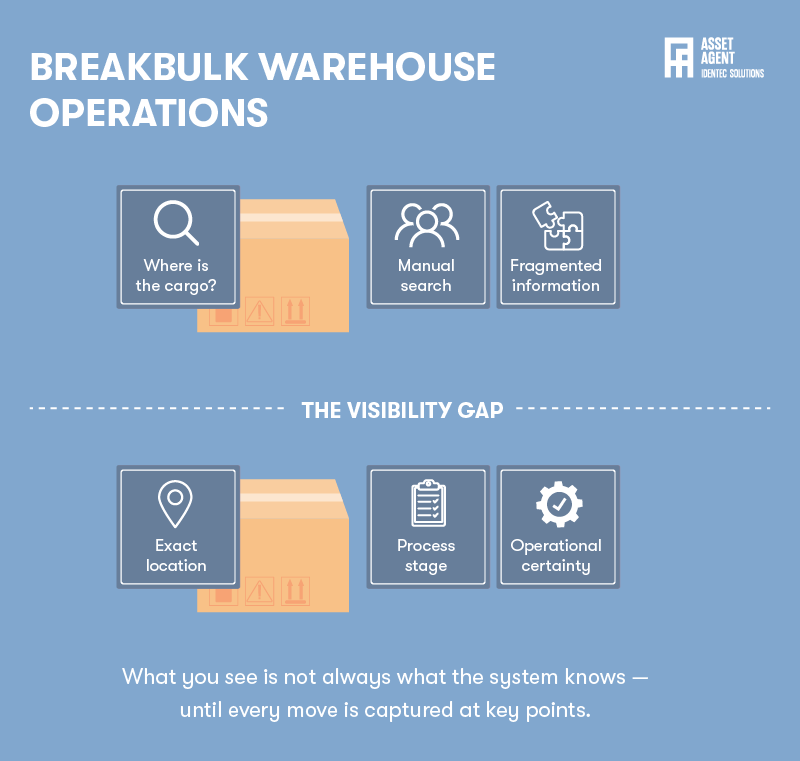
The most critical visibility gaps emerge at handover points. Every time cargo is received, moved, inspected, or transferred, there is a potential for information loss or delay. These handovers often depend on manual confirmation, verbal communication, or delayed system updates. Even minor inconsistencies—such as missing references, faulty location updates, or delayed status reports—can create uncertainties that are amplified throughout the entire operation.
Another issue is system fragmentation. In many terminals, the various stakeholders work with different tools and data structures. Freight forwarders, terminal operators, appraisers, and transport companies may each maintain their own records on the same cargo. Without close integration, the warehouse becomes the place where these inconsistencies surface. Instead of acting as a control instance, it becomes a reconciliation instance – correcting discrepancies rather than preventing them.
There is also a temporal dimension. Warehouse systems are often updated in selected steps. While freight status is recorded upon receipt, storage, and dispatch, it is not necessarily captured during intermediate movements. In fast-paced operations, this often creates gaps where the system does not fully reflect the current physical state of the warehouse.
Losing Visibility Between Cargo and Operations
The consequences of these gaps for operations are significant. Cargo may remain physically present while becoming digitally "lost." This necessitates time-consuming searches. Planning risks becoming reactive, as decisions are based on incomplete or outdated information. Coordination between the yard and the vessel suffers when cargo availability cannot be reliably confirmed. And delays can trigger a chain reaction across multiple processes.
As throughput increases - the market is expected to grow from USD 35.64 billion (2025) to USD 43.65 billion (2030) (2) - the complexity of maintaining transparency grows disproportionately. More freight movements mean more handovers, more data points, and more opportunities for discrepancies between physical and digital records. Without robust mechanisms for tracking and identification at each step, visibility deteriorates faster than operational volume increases.
The Hidden Cost of Search Times and Operational Uncertainty
Cargo identification problems are often seen as occasional glitches; isolated incidents that can be resolved with a little extra effort. However, closer inspection reveals that in many breakbulk warehouses, teams have to spend a surprisingly large amount of time searching for cargo, verifying documents, and resolving discrepancies between physical inventory and system data.
A typical scenario is that cargo needs to be loaded onto a truck or vessel. The documents are available, the time slot is booked, but the cargo cannot be located immediately. This triggers a chain reaction: warehouse staff interrupt other tasks to search, supervisors are called in, and the truck either waits (this is considerably more difficult with a ship, depending on the cargo) or departs only partially loaded. Multiply this by the number of such incidents per day, and the operational impact becomes clear.
In addition to higher labour costs and inefficient equipment utilisation, those responsible can face substantial penalties. Discrepancies in cargo identification can trigger claims, especially with high-value goods or project cargo. In the worst-case scenario, the cargo is considered lost – only to be later rediscovered in the warehouse, mislabelled, or incorrectly stored.
How to Get From Static Storage to Event-Driven Operational Visibility?
Breakbulk warehouses continue to operate on the same basic logic as before: freight is delivered, stored at a defined location, remains there for a certain period, and is later retrieved for onward transport. What is changing is the expectation of how warehouses should behave within the overall breakbulk terminal system. They are increasingly expected to function as active participants in operational flow management, rather than being passive storage zones. The underlying principle is the requirement for visibility of the freight throughout its movement within the terminal environment.
Specifically, this means transitioning from a system of a few isolated status updates to a model of operational transparency. Instead of tracking freight only at fixed points—such as receiving, storage, and shipping—the warehouse becomes a continuously updated environment where key operational movements and status changes are automatically reflected at defined control points.
This changes the role of warehouse management systems. Traditionally, these systems primarily record transactions retrospectively. Near real-time visibility enables immediate decision-making. They not only document past events but also reflect the current state and the next steps.
This improves internal efficiency and planning certainty on the one hand, and on the other hand, it also strengthens the cooperation of all parties involved, such as terminal operators, shipping companies, surveyors and transport service providers.
Event-Driven Awareness Through Control Points
Breakbulk cargo does not require continuous tracking throughout the warehouse. Instead, visibility is achieved through clearly defined control points. Zones are defined to represent key phases in the cargo lifecycle, such as receiving areas, inspection points, storage locations, staging areas, and shipping areas. Each zone serves as a control boundary where the cargo status can be confirmed and updated.
This approach creates a structured view of warehouse activities. The system reflects the most recent confirmed status of each load unit based on the last known operational process. This provides the warehouse with a reliable status overview.
This ensures that all parties involved work from the same operational reference point. As soon as cargo arrives in a staging area, it is not only physically moved but also digitally confirmed as ready for the next process step. This reduces uncertainty between warehouse teams, planning functions, and external partners.
This structure closely reflects how breakbulk services and operations function in practice. Effective cargo management doesn't require continuous tracking; clearly defined checkpoints where the status is confirmed and shared terminal-wide are sufficient.
Essentially, the warehouse becomes a sequence of controlled checkpoints instead of an uncontrolled flow of untracked movements. Each transition between zones improves the accuracy of the situational awareness and ensures that planning, coordination, and execution are always based on the most up-to-date, confirmed information.
This is what makes the approach so effective in breakbulk environments: complexity is structured into a sequence of traceable operational events.
The Warehouse as a Dynamic Coordination Hub
Warehouses were often viewed as buffer zones – places where cargo is temporarily stored between ship unloading and onward transport. This view is increasingly outdated. Due to rising complexity, tighter schedules, and increased transparency requirements at terminals, the warehouse is fundamentally evolving into a dynamic coordination hub within the terminal ecosystem.
It is integrated into numerous operational processes. Ship operations, yard planning, customs procedures, inspections, consolidation activities, and inland transport all rely on accurate and timely information about cargo status and location to function effectively.
Cargo isn't simply stored and retrieved – it's continuously coordinated with the operational requirements of the entire terminal. A single cargo unit can go through several status phases in rapid succession: unloading, inspection, staging, grouping with other units, and preparation for shipment. Each of these transitions is not just a physical movement, but a coordination event involving multiple parties.
The warehouse becomes an active information and decision-making environment where cargo status and readiness are updated at defined operational checkpoints and shared across systems. While this doesn't reduce the complexity of breakbulk handling, it does make it manageable. The warehouse becomes the central hub where complexity isn't eliminated, but rather structured and made usable.
FAQ
How Did Breakbulk Warehousing Evolve From Sheds to Modern Terminals?
Breakbulk warehouses originated in the early days of seaport operations, when cargo arrived in crates, barrels, and sacks. Goods were handled, unloaded, sorted, and temporarily stored in simple, covered halls on the quayside before onward transport. Even in this early phase, repacking, consolidation, and trading took place there. Identification relied heavily on manual markings, paper documents, and local expertise.
With containerisation in the mid-20th century, standardised units reduced the need for manual handling, and many traditional warehouses were replaced or repurposed. However, breakbulk cargo did not disappear. Project and oversized cargo, steel products, and speciality goods continued to require specialised handling and storage.
Today's breakbulk warehouses are specialised facilities designed for this complexity, combining robust infrastructure with flexible operations. Despite modernisation, they remain heavily reliant on manual processes, which explains why challenges in identification and transparency persist.
Takeaway
Breakbulk warehouses are far more than just temporary storage facilities. They have become operational coordination centres where freight status and handling processes must be constantly aligned between all parties involved. This requires reliable operational transparency. Fragmented systems and inconsistent freight identification can lead to discrepancies between reality and databases, causing delays, lengthy search times, planning uncertainty, and inefficiencies.
These problems can be addressed with defined operational control points. Important freight movements and status changes are recorded, for example, at goods receipt, inspection, preparation, and dispatch. This creates a shared and continuously updated overview of the situation.

Glossary
Oversized cargo at seaport terminals means freight that is too large, too heavy, or too awkwardly shaped for standard container handling. It includes items such as industrial machinery, turbines, steel structures, and project cargo that need special lifting gear, open storage space, route planning, and careful lashing or stowage. At the terminal, it often moves through breakbulk or project cargo areas rather than container yards. The main concerns are safety, port equipment limits, vessel access, and avoiding damage during lifting and transfer. (3)
Throughput means the amount of breakbulk cargo a terminal can handle in a given period, usually measured in tons, tonnes, or pieces per hour/day/year. It depends on berth access, crane and forklift productivity, storage space, cargo mix, labour, and how quickly cargo can be lifted, lashed, moved, and cleared. Higher throughput means the terminal can process more cargo with less waiting and congestion, which lowers vessel time alongside and improves overall port efficiency. (4)
Reference:
(1) https://tj-chinafreight.com/break-bulk/
(2) https://www.mordorintelligence.com/industry-reports/break-bulk-shipping-market
(3) House, David (2020). Cargo Work: For Maritime Operations. 8th ed., Elsevier.
(4) Bichou, Khalid (2009). Port Operations, Planning and Logistics. Informa/Routledge.
Note: This article was partly created with the assistance of artificial intelligence to support drafting.

Author
Conny Stickler, Marketing Manager Logistics
Constance Stickler holds a master's degree in political science, German language and history. She spent most of her professional career as a project and marketing manager in different industries. Her passion is usability, and she's captivated by the potential of today's digital tools. They seem to unlock endless possibilities, each one more intriguing than the last. Constance writes about automation, sustainability and safety in maritime logistics.