| Written by Constance Stickler
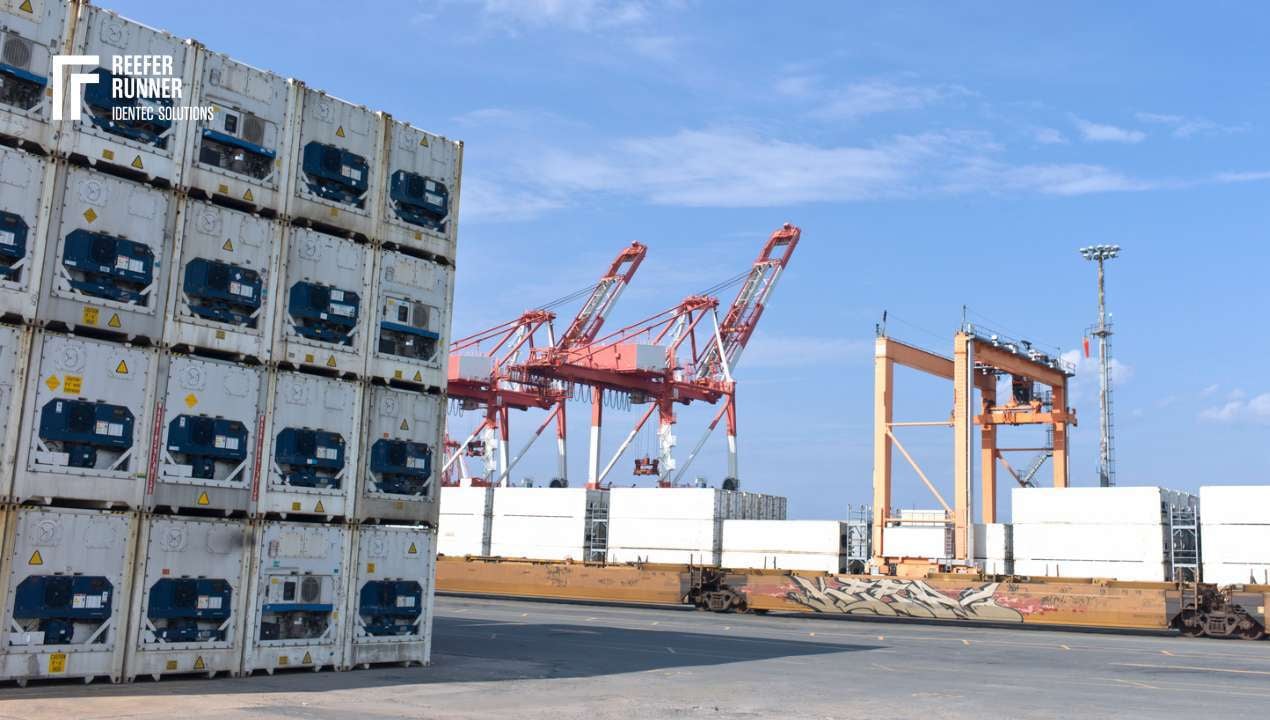
Table of contents:
- When the Port Becomes Part of the Cold Chain
- The Reefer Journey Through the Container Terminal
- What Are the Service Levels in Port Logistics Refrigerated Services?
- How Are Port Logistics Refrigerated Services Digitalised?
- FAQ
- Takeaway
- Glossary
When the Port Becomes Part of the Cold Chain
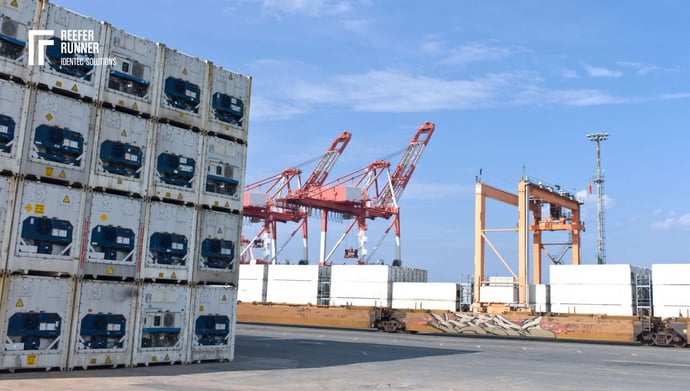
Unlike a dry container, a refrigerated container is not simply cargo stored between vessels and trucks. It is an energy-dependent system that transports temperature-sensitive and time-critical goods that can spoil within hours if the necessary conditions are not met. Once a refrigerated container passes through the terminal gate, the terminal becomes part of the cold chain.
To offer refrigerated services in port logistics, a continuous power supply, structured reefer monitoring, technical expertise, and disciplined processes are essential. Every connection, alarm, and disconnection has operational and financial consequences. Delays and undetected temperature deviations can lead to cargo claims, reputational damage, and strained customer relationships.
The terminal will become:
- a temporary cold storage facility
- a technical service provider
- an energy-intensive operation
- an interface for risk control between sea and land transport
The responsibility is growing.
And, there is no way to avoid it. Global trade in perishable goods continues to expand, with a projected compound annual growth rate (CAGR) of approximately 5.9% to 8.23% between 2025 and 2035 (1). The volume of refrigerated containers is growing faster than total container throughput at many terminals. This growth brings with it increased complexity: higher occupancy density, increased energy demand, more alarms, higher service expectations, and stricter sustainability checks.
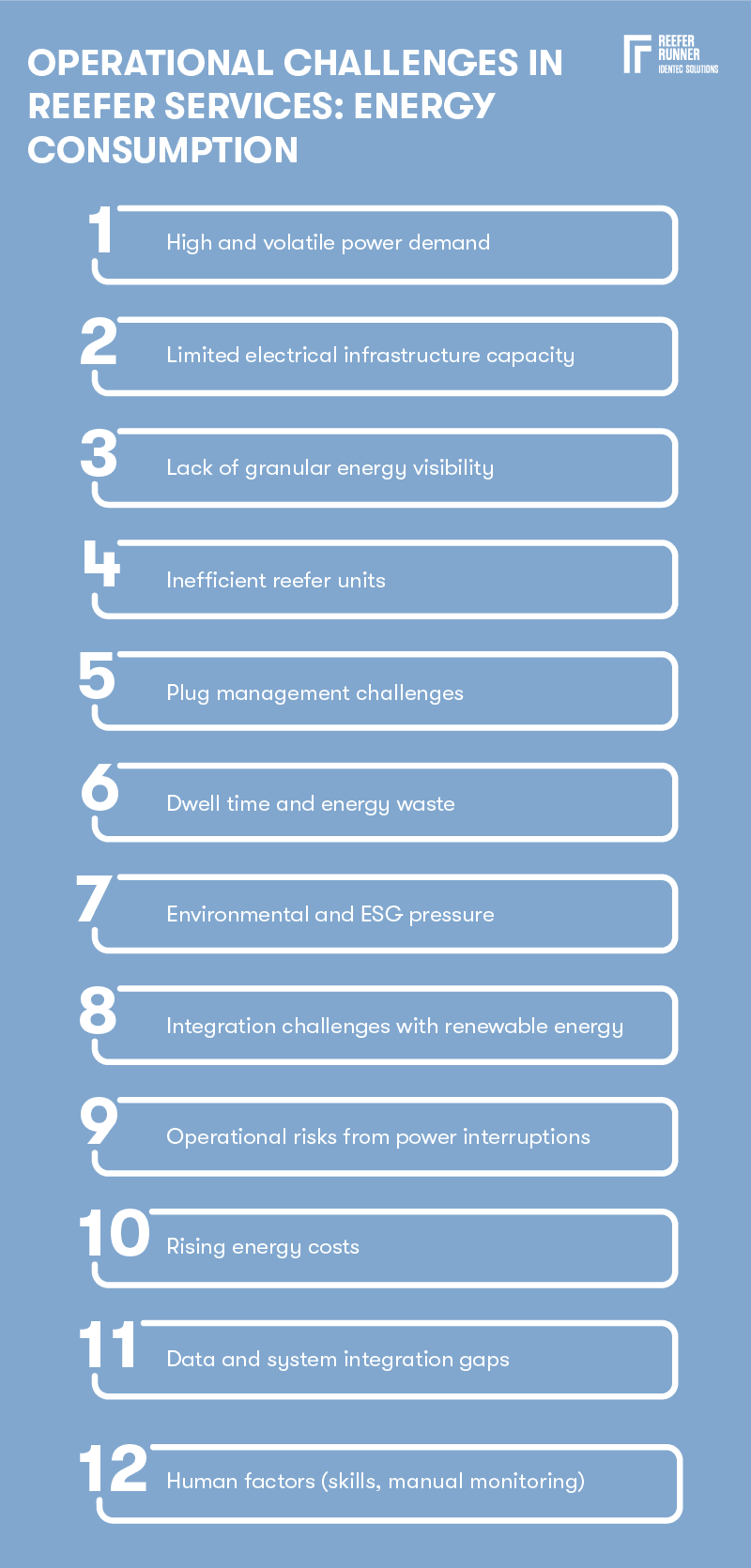
Energy consumption, in particular, has become a crucial factor. Refrigerated container depots are among the largest electricity consumers within a container terminal. Hundreds or thousands of units consuming power simultaneously generate significant peak loads. Electricity prices are volatile. CO₂ reporting is no longer optional. Scope 2 emissions are scrutinised by both customers and regulators. What used to be "simply plugging in" is now a strategic operational decision.
At the same time, customer expectations have changed. Shipping companies, shippers, and freight forwarders are increasingly demanding transparency:
- Real-time temperature data
- Structured reporting
- Defined response times
- Reliable alarm management
- Proof of energy efficiency and sustainability measures
In this environment, mere compliance with regulations is no longer sufficient.
To differentiate themselves in the market, terminals must approach refrigeration services as a structured, measurable, and optimised discipline. This includes areas such as warehouse planning, electrical infrastructure, technical maintenance, IT systems and data integration, sustainability strategy, and the design of commercial services. When they are coordinated, refrigeration services evolve from a mere obligation to a competitive advantage.
The question is no longer whether terminals are part of the cold chain.
The question is rather how well they function within that chain.
The Reefer Journey Through the Container Terminal
Maintaining an optimal cold chain at the port requires absolute transparency across the entire process, including handovers, risks, energy performance indicators, and decision-making points. A reefer's journey through the terminal is a chain of closely interconnected steps. Weaknesses in one phase impact the next, while excellence reinforces itself.
Pre-Arrival Coordination
Long before the container arrives, shipping companies transmit booking information, including:
- Target temperature
- Ventilation settings
- Controlled atmosphere (CA) parameters (if applicable)
- Dangerous goods declarations
- Special handling instructions
Accuracy is crucial at this stage. Incomplete or delayed data can lead to incorrect allocation to a storage location, inadequate service preparation, or insufficient power planning. All of them are among the terminal's preparatory tasks:
- Allocation of a parking space in the refrigerated container area
- Checking the available power outlet capacity
- Forecasting the expected power load
- Providing resources as needed
Energy planning already plays a major role here. A sudden increase in refrigerated container arrivals within a short period can cause peak loads. Without forecasts and efficient parking space management, the power grid can also become overloaded.
Gate-In and Initial Inspection
With the arrival of the reefer, responsibility transfers from the external transport provider to the terminal. Typically, the following checks are carried out upon container entry: container ID, seals, visible damage, and documentation. For reefers, it must also be verified that various parameters, such as temperature and humidity, meet the target values. This is the first operational safety measure against later claims and, therefore, must be carefully documented.
Yard Positioning and Plugging
The reefer is now being transported to its assigned refrigerated container block. Which block it is is based on the following information:
- Expected dwell time
- Export vs. import status
- Priority cargo
- Balanced electrical load distribution
- Accessibility for monitoring and repair
Now comes the most time-critical step – connecting to the power grid. This connection must also be logged with a timestamp, as a delayed connection increases the risk of charging problems.
At the same time, the terminal must also try to avoid peak loads, which can strain the system and become expensive. Intelligent terminals manage both operating hours and load distribution (peak shaving).
Monitoring During Dwell
The monitoring phase is the longest part; depending on the terminal configuration, it can include manual patrols, semi-automated data collection, or fully remote digital systems. This determines whether a terminal operates reactively or proactively. For example, if alarms are only detected when personnel conduct patrols, response times depend on the frequency of these patrols. Digital systems, on the other hand, enable near real-time detection and structured escalation.
The type of monitoring also plays a role in energy consumption. Continuous data can reveal units with unusually high power consumption, inefficient cooling cycles, and early signs of mechanical failures that would otherwise go undetected.
Technical Intervention
If an alarm is triggered or unusual readings are detected, technical intervention may be required. This could include:
- Diagnostic checks
- Sensor replacement
- Control unit reset
- Refrigerant adjustments
- Fan or compressor repairs
Pre-Departure Preparation
Before departure – whether by ship, truck or train – the refrigerated container undergoes a final check (correct temperature, no open alarms, seals intact). For the transfer process, the disconnection must be precisely timed; the goal is to minimise the duration of the power outage while ensuring a smooth transition. The interval between disconnection and reconnection should be measured and monitored as a performance indicator.
The Energy Layer Across the Entire Journey
The detailed mapping of the refrigerated container journey not only describes the processes but also reveals the following:
- Where delays occur
- Where risks accumulate
- Where energy is wasted
- Where automation creates added value
- Where KPIs should be implemented
Every step of this journey is measurable.
Every handover can be standardised.
Every energy interaction can be optimised.
What Are the Service Levels in Port Logistics Refrigerated Services?
Not all refrigerated transport services are created equal. Some terminals offer only the bare minimum to keep goods moving. Others, however, consciously design refrigerated transport as a structured, value-added service. The difference lies not only in operational maturity but also in market positioning.
Standard Services
In the simplest case, refrigerated transport services include compliance with legal requirements:
- Connection and continuous power supply
- Regular monitoring (manual or digital)
- Notification of the shipping company in case of an alarm
- Basic documentation and reporting
- Safe disconnection and transfer for departure
This foundation ensures continuous temperature control, operational reliability, and contractual compliance. That's sufficient—unless a problem arises. The risk of remaining at this level is obvious: refrigerated transport services become a cost factor. Energy consumption increases. Personnel costs rise. The risk of reefer cargo damage remains. However, differentiation is minimal. A terminal that only offers standard services primarily competes on throughput and pricing.
Structured Operational Excellence
This level goes beyond "connect and monitor" and aims for measurable performance. The terminal is defined by KPIs such as:
- Connection time after entry
- Alarm response time
- Average dwell time of refrigerated containers
- Duration of power outages during transfer
- Percentage of alarm-free dwell time
The processes are standardised. There are defined escalation procedures, documented inspection routines, specified refrigerated container teams, and clearly assigned responsibilities.
This offers clear advantages for the customer; faster technical response significantly reduces the risk of unnoticed deviations. And of course, the terminal also benefits, as fewer malfunctions mean fewer losses and a better reputation.
Value-Added Services
Once efficient and effective monitoring is implemented, additional services can be offered, such as dashboards for data reports and remote access to monitoring data for customers. Data transparency is becoming increasingly commonplace and can significantly contribute to customer trust. If a shipping company or freight owner trusts the refrigerated container capacity of a terminal, switching becomes less attractive.
Energy reporting
Another service level is energy measurement at the container level, which enables reporting on the CO₂ footprint based on the dwell time of refrigerated containers. Why is this important? Because energy has become both a cost factor and a sustainability issue. Shipping companies and shippers are under pressure to reduce Scope 3 emissions. If a terminal can provide verified energy data, this becomes part of its decarbonisation strategy.
Terminals that ignore energy transparency risk being perceived as outdated. Those that integrate it into their service portfolio position themselves as forward-thinking reefer logistics partners.
How Are Port Logistics Refrigerated Services Digitalised?
Without structured data flow, even the best physical infrastructure only works partially. Manual checks, paper logs, and isolated systems may have worked in times of lower refrigeration volumes and simpler customer expectations—today, they represent a massive limitation in performance. The future of refrigerated container services demands control, predictability, and reliability.
Manual checks have inherent limitations:
- Measurements are periodic, not continuous.
- Alarm detection is time-dependent.
- Documentation can be inconsistent.
- Data analysis is difficult after the fact.
Digital monitoring systems fundamentally change this:
- Real-time temperature readings
- Alarm notifications within seconds
- Operating status updates
- Historical, continuous data logs
The main advantages are clear. On the one hand, response times are reduced because alarms are reported almost immediately, allowing for timely intervention. On the other hand, measurements are continuous, recording even the smallest or shortest-lived deviations (learn more about reefer operations).
Integration with the Terminal Operating System (TOS)
While silo systems perform their function, digitalisation only unfolds its full potential when systems communicate with each other. Integrating refrigerated container monitoring platforms into the TOS (Technical Operating System) offers numerous advantages:
- Automatic creation of work orders upon alarm
- Real-time updates of container status
- Display of connection and disconnection times
- Recording of dwell time in conjunction with energy consumption
- Prioritised handling based on cargo sensitivity
Furthermore, safety can be improved; for example, it can be defined that the TOS can link the command to retrieve a reefer to the condition of disconnection from the power grid.
Without integration, the worst case scenario is that technicians might receive alarm data in one system, location data in another, and operational priorities via phone call. This fragmentation increases response time and the risk of errors.
Data as a Management Tool
Digitisation creates a data basis for strategic management, allowing the following to be analysed:
- Frequency and type of alarms
- Average alarm response time
- Units with recurring technical issues
- Peak energy demand periods
- Correlation between dwell time and energy usage
Instead of operating based on assumptions, management can identify bottlenecks, justify infrastructure investments, and redesign processes with measurable results. Data also strengthens discussions with shipping companies. If a unit repeatedly arrives in poor technical condition, documented evidence supports the dialogue to rectify the deficiencies.
Predictive and Proactive Capabilities
By analysing historical alarm patterns and energy consumption behaviour, digital systems can detect anomalies before they worsen. For example, abnormal power consumption can indicate compressor overload. Or repeated minor alarms can herald a major failure. Proactive risk management reduces damage, emergency repairs, and business interruptions.
Customer-Facing Transparency
Changes are also being made in customer interactions to meet the growing demand for transparency. Instead of regular email notifications, modern terminals offer:
- Secure web portals
- API data exchange
- Downloadable temperature logs
- Structured performance reports
Instead of requesting information only after an incident, customers can continuously monitor performance. This strengthens the terminal's credibility as a partner in the cold chain, rather than as an opaque intermediary.
Digitalisation and Energy Management
Real-time energy data makes it possible to accurately predict peak loads, quickly identify inefficient units, and directly link dwell times to consumption. Energy peaks can be anticipated. Load distribution can be adjusted. CO₂ reporting becomes data-driven instead of estimated.
Digitalisation transforms energy from a rough estimate into a controllable variable.
The Human Factor in a Digital Environment
To state it clearly from the outset: Digitalisation does not replace skilled workers. It complements their skills. Technology provides the information, but it takes people to interpret, prioritise, and act.
For the transformation to be successful, employee training, defined escalation protocols, clear responsibilities, and a culture of acceptance of data-driven processes are essential. Furthermore, workflows must be thoroughly examined: If systems are installed but inefficient processes remain unchanged, the full benefits cannot be realised. Digitalisation is not simply about acquiring software, but about a complete operational redesign.
The Strategic Outcome
When digital systems, energy management, and structured processes are optimally aligned, port logistics refrigeration services reach a new level of maturity. Digitalisation is a crucial competitive advantage. Refrigerated transport services in port logistics that rely solely on manual control will struggle to grow sustainably. Those that integrate digital intelligence into every step of refrigerated transport create resilience, transparency, and long-term competitive advantages.
FAQ
How can peak shaving prevent energy spikes in reefer operations?
Depending on the duration of the transfer of a reefer container, for example, from ship to terminal yard, the temperature rises slightly or significantly. Immediately after being connected, reefers therefore typically consume more electricity for several minutes, sometimes even two to three times the normal operating current, because the compressor now runs at full power to bring the container back down to the target temperature. If dozens, if not hundreds, of reefers are connected simultaneously, peak loads occur. Intelligent IoT platforms, such as the refrigerated container monitoring integrated into TOS, therefore stagger the connection sequence and prioritise urgent refrigerated containers, while delaying others by a few minutes.
Takeaway
Refrigerated transport is central to energy consumption, risk management, digital transformation, and customer expectations at container terminals. Ports that approach their handling as a structured system with defined KPIs, integrated monitoring, controlled energy management, and clear service levels achieve measurable benefits: reduced risk of damage, lower and more predictable energy costs, increased operational reliability, stronger ESG positioning, and greater customer trust and loyalty.
Excellence in refrigerated container handling cannot be achieved through a single, isolated investment. It requires coordinated improvements in terminal planning, energy infrastructure, digital systems, qualified personnel, and business strategy.
The port is already part of the cold chain.
The strategic opportunity lies in leveraging this role to its fullest potential.
Delve deeper into one of our core topics: Refrigerated containers
Glossary
Scope 2 emissions are indirect greenhouse gas emissions occurring from the generation of purchased energy—primarily electricity, steam, heating, and cooling—used in a terminal’s operations. Unlike Scope 1 (direct emissions from owned sources), Scope 2 emissions arise off-site at utility or district energy facilities but are attributed to the consuming entity based on energy consumption data from bills. Companies calculate Scope 2 using grid emission factors or supplier-specific data, often applying market-based (contracts/REC) or location-based (average grid) methods to track decarbonisation progress. (2)
A silo system (or organisational silos) refers to isolated departments, teams, or information systems within a company that operate independently, with limited communication, data sharing, or collaboration across boundaries. This creates fragmented workflows, duplicate efforts, and misaligned goals, often due to competing priorities, incompatible tools, or cultural barriers. While silos can foster departmental expertise, they hinder overall efficiency, innovation, and agility in complex organisations like logistics firms or container terminals. (3)
Reference:
(1) https://www.wiseguyreports.com/reports/reefer-container-leasing-market
(2) Jubb, Peter et al. (2021). Carbon Accounting and Savvy Reporting. Springer.
(3) Galbraith, Jay R. (2002). Designing Organizations. Jossey-Bass.
Note: This article was partly created with the assistance of artificial intelligence to support drafting.

Author
Conny Stickler, Marketing Manager Logistics
Constance Stickler holds a master's degree in political science, German language and history. She spent most of her professional career as a project and marketing manager in different industries. Her passion is usability, and she's captivated by the potential of today's digital tools. They seem to unlock endless possibilities, each one more intriguing than the last. Constance writes about automation, sustainability and safety in maritime logistics.