| Written by Mark Buzinkay
Table of contents:
- What Is an Underground Vehicle?
- Main Types of Underground Vehicles and Their Roles
- Key Technologies in Modern Underground Vehicles
- Choosing the Right Underground Vehicle
- The Future of Underground Vehicles
- FAQs
- Takeaway
- Glossary
What Is an Underground Vehicle?
An underground mining vehicle is a specialised machine designed to operate in underground mining environments where space restrictions, poor visibility, rough terrain, and ventilation limitations create unique operational challenges. Unlike surface mining equipment, underground vehicles are compact, highly manoeuvrable, and engineered to withstand extreme operating conditions while maintaining high productivity and safety standards.
Underground mines rely on a wide range of vehicles to move ore, transport workers, drill tunnels, stabilise rock walls, and support daily mining activities. These vehicles operate in narrow tunnels, steep ramps, and areas with limited airflow, which requires manufacturers to focus heavily on durability, low emissions, operator protection, and efficient power systems.
Traditionally, underground vehicles have been powered by diesel engines because of their high torque and long operating range. However, battery-electric underground vehicles are becoming increasingly popular due to stricter environmental regulations and the mining industry’s push toward lower emissions and reduced ventilation costs. Battery-electric systems generate less heat and eliminate diesel particulate emissions, thereby significantly improving underground air quality.
Modern underground mining operations also rely heavily on automation and digital technologies. Remote-controlled loaders, autonomous haulage systems, and vehicle tracking platforms help mining companies improve safety while optimising traffic flow and equipment utilisation.
Because underground mining involves many different operational stages, there is no single underground vehicle that performs every task. Instead, mines use specialised fleets designed for loading, hauling, drilling, scaling, bolting, maintenance, and personnel transport.
See also: Mine safety: Why digital management?

Main Types of Underground Vehicles and Their Roles
Load-Haul-Dump (LHD) Vehicles
Load-Haul-Dump vehicles, commonly known as LHDs or underground loaders, are among the most important underground mining machines. Their primary task is to collect blasted ore from the mine face and transport it to ore passes, crushers, or underground haulage systems.LHDs are designed with articulated steering systems that allow them to manoeuvre efficiently through narrow tunnels and sharp corners. Most underground loaders feature low-profile designs to fit within height-restricted mine workings while maintaining high payload capacities.Typical LHD parameters include:
- Bucket capacities from 1 to more than 20 cubic meters
- Payload capacities ranging from 3 to over 25 tonnes
- Compact turning radii
- Four-wheel-drive traction systems
- Heavy-duty frames and reinforced buckets
Modern LHDs are available in diesel, tethered electric, and battery-electric configurations. Battery-electric LHDs are becoming increasingly common because they reduce ventilation demands and improve underground working conditions. Studies show that electric mining equipment can reduce heat and emissions while improving operational uptime. Many mining companies also use tele-remote or semi-autonomous LHDs. Operators can control these vehicles from safe locations away from active blasting zones, improving both productivity and worker safety.
Underground Mining Trucks
Underground mining trucks transport ore and waste rock over longer distances within the mine. These haul trucks are specifically engineered for underground conditions, featuring compact frames, high payload capacities, and advanced braking systems that can handle steep mine ramps.Unlike conventional road trucks, underground haul trucks are optimised for:
- Low overhead clearances
- Tight tunnel geometries
- Rough underground road conditions
- Continuous heavy-load operation
Payload capacities typically range from 15 to more than 60 tonnes, depending on the mine design and production scale. Manufacturers increasingly focus on improving fuel efficiency, reducing maintenance requirements, and enhancing operator comfort through ergonomic cabin designs and digital monitoring systems.Battery-electric underground trucks are also becoming more common in modern mines. These vehicles help reduce diesel particulate matter and ventilation costs while supporting sustainability goals. Industry guidelines highlight the growing adoption of battery-electric haulage systems in underground operations. Advanced traction control systems, onboard diagnostics, and collision avoidance technologies are now standard features in many underground haul trucks. These systems help operators maintain safe speeds while improving overall fleet efficiency.
Drilling Jumbos
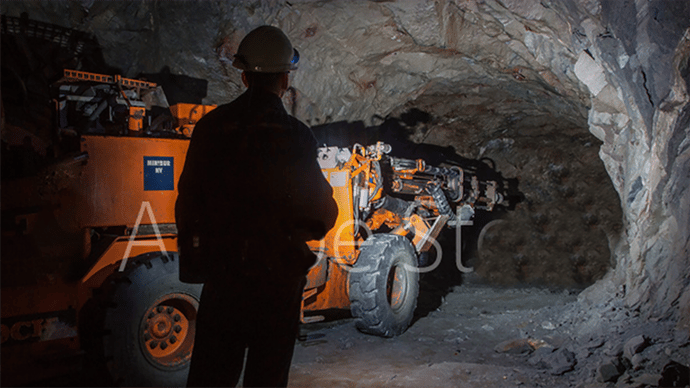
Drilling jumbos are specialised underground vehicles used for tunnel development and production drilling. They drill blast holes into rock faces so explosives can be inserted to fragment the rock during mining operations.These vehicles are usually equipped with one or more hydraulic drilling booms mounted on a mobile carrier. The number of booms depends on the tunnel size and drilling requirements. Single-boom jumbos are common in smaller tunnels, while large underground development projects often use multi-boom machines.Key features of drilling jumbos include:
- Electro-hydraulic drilling systems
- Automated drilling patterns
- Precision navigation systems
- Operator protection cabins
- Dust suppression systems
Modern drilling jumbos increasingly use digital controls and automated positioning systems to improve drilling accuracy and reduce operator fatigue. Some electric jumbos use battery-powered tramming systems combined with grid-connected drilling functions. (bba)High drilling accuracy is essential in underground mining because poor blast quality can worsen fragmentation, reduce productivity, and create unsafe tunnel conditions.
Bolters and Ground Support Vehicles
Ground support is critical in underground mining because unstable rock formations can create severe safety hazards. Bolters and ground support vehicles stabilise mine tunnels by installing rock bolts, mesh, cable anchors, and other reinforcement systems.These underground vehicles are designed to work close to tunnel walls and roofs while providing operators with protective cabins and safety shielding. Many bolting machines combine drilling and bolt installation functions in a single platform.Typical functions include:
- Roof bolting
- Cable bolting
- Mesh installation
- Resin injection
- Ground stability reinforcement
Modern bolters often integrate automated boom positioning and digital monitoring systems to improve installation accuracy. Ground support vehicles play a vital role in reducing the risk of rock falls and tunnel collapses.Manufacturers continue developing more advanced bolting systems with improved operator ergonomics and remote-control capabilities. Specialised underground support vehicles are now widely used in both hard-rock and soft-rock mining applications.
Personnel and Utility Vehicles
Personnel carriers and utility vehicles support the daily operation of underground mines by transporting workers, tools, spare parts, fuel, and maintenance equipment throughout the mine.These vehicles are highly versatile and may include:
- Crew transport vehicles
- Maintenance trucks
- Fuel and lubrication vehicles
- Scissor lifts
- Emergency response vehicles
- Water trucks
- Explosive transport units
Personnel carriers are designed with safety systems, including rollover protection, emergency exits, and fire suppression equipment. Utility vehicles are often customised according to specific mine requirements.As underground mines become deeper and more complex, utility vehicles are increasingly equipped with communication systems, fleet management software, and real-time monitoring technologies that improve operational coordination.Battery-electric personnel carriers are also gaining popularity because they help reduce underground heat generation and improve air quality for workers.
Key Technologies in Modern Underground Vehicles
Underground mining vehicles are rapidly evolving as mining companies adopt electrification, automation, and digitalisation technologies.
Battery-electric underground vehicles are one of the most important innovations in the industry. Electric vehicles eliminate diesel exhaust emissions and reduce underground ventilation requirements, thereby significantly lowering operational costs. However, battery performance, charging infrastructure, and fire safety remain important considerations for mine operators. Automation is another major trend. Tele-remote operation allows workers to control underground vehicles from safe control rooms, reducing exposure to hazardous conditions. Some mines already use semi-autonomous or fully autonomous haulage systems that operate continuously with minimal human intervention.
Safety technologies are also becoming more advanced. Modern underground vehicles may include:
- Collision avoidance systems
- Proximity detection
- Fatigue monitoring
- Fire suppression systems
- Real-time diagnostics
Digital connectivity now plays a major role in underground fleet management. Mining companies increasingly use vehicle tracking systems, wireless communication networks, and real-time location services (RTLS) to monitor underground traffic and equipment performance.
These technologies improve operational visibility while helping mines optimise traffic flow, reduce downtime, and enhance worker safety.
Read more about mine monitoring.
Choosing the Right Underground Vehicle
Selecting the right underground vehicle depends on multiple operational and geological factors. Mine planners must consider tunnel dimensions, production targets, ventilation capacity, haul distances, ore characteristics, and maintenance requirements before investing in equipment.Low-profile vehicles are often necessary in mines with restricted tunnel heights, while larger operations may prioritise high-capacity haul trucks and loaders to maximise productivity.Mining companies must also decide between diesel and battery-electric fleets. Diesel vehicles generally offer longer operating ranges and established support infrastructure, while electric vehicles provide environmental and ventilation advantages.Additional selection factors include:
- Reliability and durability
- Availability of spare parts
- Ease of maintenance
- Operator training requirements
- Automation compatibility
- Total cost of ownership
The increasing use of digital mine management systems means that compatibility with tracking and fleet management platforms is becoming an important purchasing criterion as well.
The Future of Underground Vehicles
The future of the underground vehicle industry will be shaped by automation, electrification, and intelligent mine integration. Mining companies are under growing pressure to improve sustainability, reduce emissions, and enhance worker safety while maintaining profitability.
Battery-electric underground vehicles are expected to become increasingly common as charging systems improve and battery technologies mature. Autonomous fleets may eventually operate continuously with minimal human intervention, especially in hazardous or remote mining environments.
Artificial intelligence and predictive maintenance systems will also play a larger role in underground mining operations. Sensors integrated into underground vehicles can already monitor component wear, tyre conditions, battery performance, and operating temperatures in real time.
Digital connectivity will become even more important as underground mines evolve into highly connected industrial environments where vehicles, infrastructure, and control systems communicate continuously to optimise operations.
FAQ
What is an underground vehicle used for?
An underground vehicle is used for mining activities below the earth’s surface, including hauling ore, drilling tunnels, transporting workers, installing ground support, and performing maintenance operations.
What is the difference between an LHD and an underground truck?
An LHD is primarily designed to load and transport blasted ore over short distances, while an underground truck is built for hauling larger volumes of material over longer underground routes.
Why are battery-electric underground vehicles becoming popular?
Battery-electric underground vehicles reduce diesel emissions, lower ventilation costs, generate less heat, and help mining companies improve sustainability and underground air quality.
Takeaway
An underground vehicle is essential for safe and efficient underground mining operations, with specialised machines handling loading, hauling, drilling, ground support, and personnel transport. The industry is increasingly moving toward battery-electric and automated fleets that improve productivity while reducing emissions and ventilation demands. Vehicle localisation and underground traffic management are becoming critical technologies as mines adopt real-time tracking, collision-avoidance systems, and connected fleet platforms to improve safety, optimise traffic flow, and increase operational visibility in complex underground environments (continue reading here: Mining risk management and wearables).
Delve deeper into one of our core topics: Mining safety
Glossary
Torque is the rotational force that causes a machine component, such as a wheel, axle, or motor shaft, to turn. In mining vehicles, high torque is essential because it allows equipment to move heavy loads through steep ramps, rough terrain, and confined underground environments at low speeds. Torque is typically measured in Newton-metres (Nm) and directly influences pulling power, acceleration, and overall vehicle performance under demanding operating conditions. (4)
References:
(1) https://www.epiroc.com/en-iq/products/loaders-and-trucks
(4) J. L. Meriam and L. G. Kraige (1978): Engineering Mechanics: Dynamics
Note: This article was partly created with the assistance of artificial intelligence to support drafting. The head image was generated by AI.